Article Details
- Home
/ Article Details


15 Dec 2025
09
35
Disclosure: This article may contain affiliate links. If you buy through them, we may earn a commission at no extra cost to you.
Mokwheel Basalt vs Mokwheel Obsidian: Which All-Terrain E-Bike Powers Your Adventures?
If you're choosing between Mokwheel's Basalt and Obsidian, you're looking at two powerful all-terrain fat-tire e-bikes built for serious off-road capability and long-range adventures. Both share the same 48V 19.6Ah (940Wh) battery, 60–80 mile range, torque+cadence sensors, and power-station capability—but the differences in suspension, motor power, and gearing will determine which one fits your riding style.
- Basalt = front-suspension all-terrain with 1100W peak motor, 7-speed gearing, and a premium wooden rear rack—the world's first e-bike with power-station functionality.
- Obsidian = full-suspension performance with 1300W peak motor, 8-speed gearing, and 560 lb payload capacity—built for the most challenging trails and aggressive riding.
Quick pick guide
Choose the Mokwheel Basalt if you want…
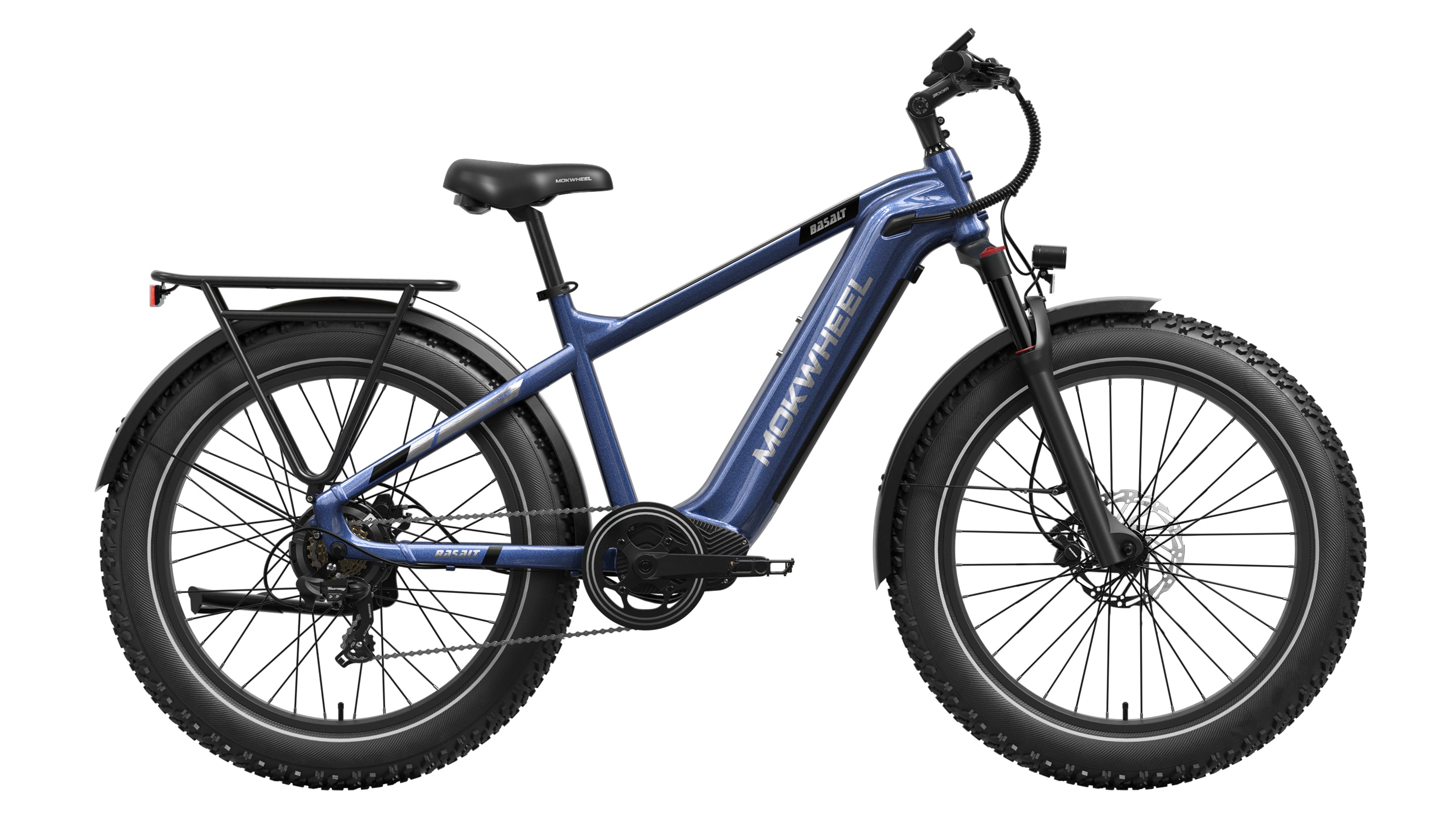
- The longest range with a 48V 19.6Ah (940Wh) battery delivering 60–80 miles
- A torque+cadence sensor for natural, responsive pedal-assist that feels like a traditional bike
- The world's first power-station e-bike with inverter capability for camping, RV trips, or off-grid adventures
- Premium touches like a wooden rear rack and TEKTRO hydraulic brakes
Choose the Mokwheel Obsidian if you want…
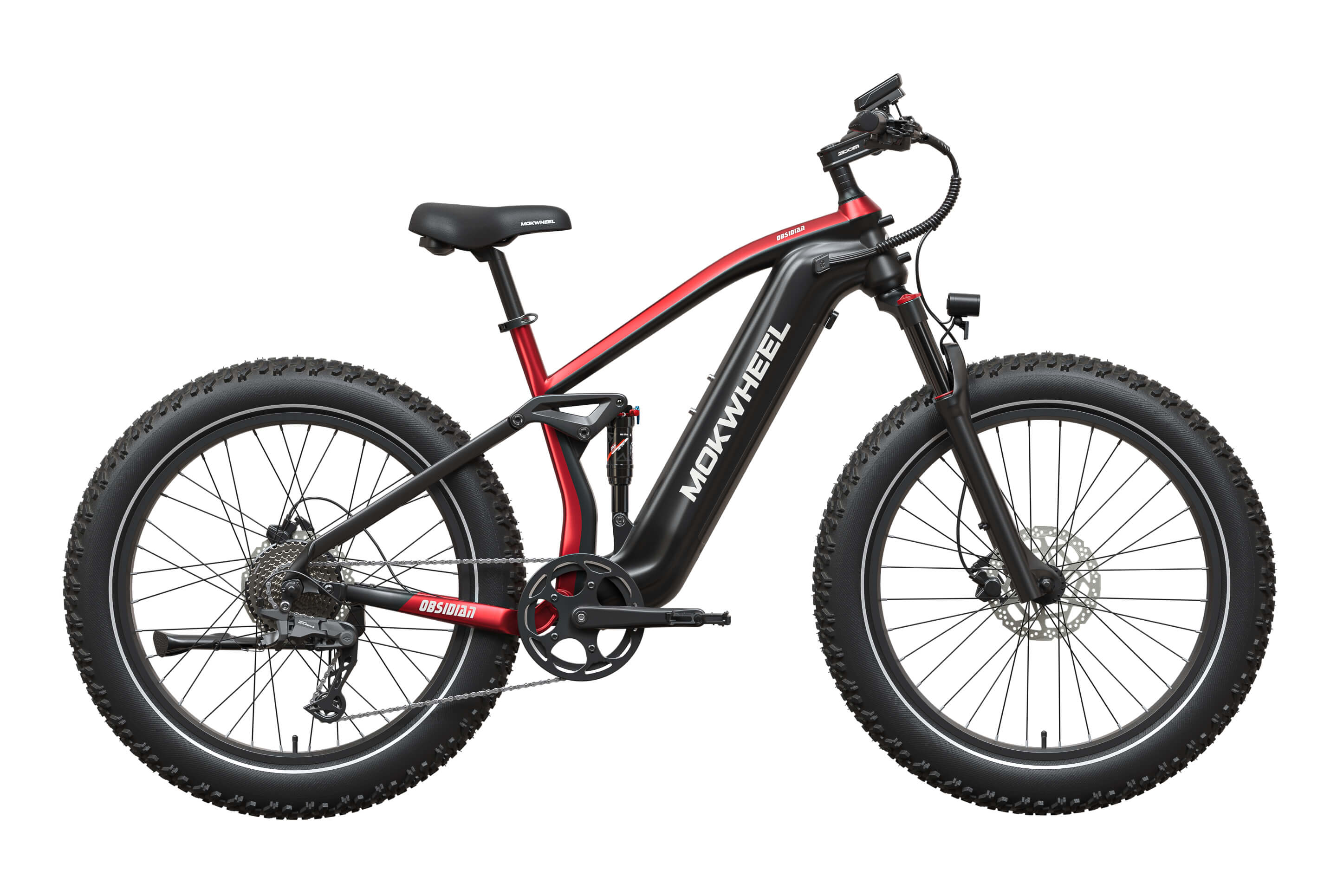
- Full suspension with 130mm front fork and rear air shock for maximum comfort on rough terrain
- A 1300W peak motor (vs 1100W on Basalt) for more aggressive climbing and acceleration
- 8-speed Shimano gearing (vs 7-speed) for more precise gear selection on varied terrain
- 560 lb payload capacity (vs 450 lbs) for heavier riders or serious cargo hauling
Product Specs
| Basalt | Obsidian | |
|---|---|---|
| Price | $1,299.99 (sale from $2,399.99) | $2,199.99 (sale from $3,099.99) |
| Motor | 750W / 1100W peak | 750W / 1100W peak |
| Battery | 48V 19.6Ah (940Wh) | 48V 19.6Ah (940Wh) |
| Range | 60–80 miles | 50–60 miles |
| Speed | 20 mph throttle / 28 mph PAS | 20 mph throttle / 28 mph PAS |
| Sensor | Torque + Cadence | Torque + Cadence |
| Tires | 26" × 4.0" Fat Tire | 26" × 4.0" Fat Tire |
| Payload | 450 lbs | 450 lbs |
| Weight | 80 lbs | 77 lbs |
| Brakes | TEKTRO HD-E350 Hydraulic | Logan HD-E480 Hydraulic |
| Standover Height | 30" | 30" |
| Special Features | Inverter capability, wooden rear rack, solar charging | All-terrain comfort, impact control |
Real-world ride feel: suspension and motor power make the difference
Basalt ride feel: stable front-suspension all-terrain
The Basalt's 110mm front suspension and 1100W peak motor deliver confident performance across mixed terrain. The front fork effectively absorbs bumps from rocks, potholes, and uneven surfaces, while the torque+cadence sensor provides natural, responsive power delivery that feels like a traditional bike with electric assistance.
Practical takeaway:
The Basalt excels on mixed terrain—pavement, gravel, light trails, and moderate off-road conditions. The front suspension handles most bumps effectively, and the 1100W motor provides strong acceleration and hill-climbing power. It's perfect for riders who want a versatile all-terrain bike that can commute during the week and explore trails on weekends.
Obsidian ride feel: full-suspension performance machine
The Obsidian's full suspension system (130mm front fork + rear air shock) and 1300W peak motor deliver maximum comfort and control on the most challenging terrain. The dual suspension absorbs impacts from both front and rear wheels simultaneously, creating a smoother, more controlled ride on rough trails, steep descents, and aggressive off-road conditions.
Important note:
The Obsidian's full suspension system is a game-changer for serious trail riding. The rear air shock with progressive damping maintains control and stability on rough terrain, while the 1300W motor provides instant power for aggressive climbing and acceleration. This is the bike for riders who prioritize maximum comfort and performance on challenging trails.
Range: identical battery, same impressive range
Both bikes share the same 48V 19.6Ah (940Wh) battery, delivering identical 60–80 mile range—making this one area where there's no difference between the two.
Mokwheel Basalt range
The Basalt's 48V 19.6Ah (940Wh) battery delivers:
- 60–80 miles claimed range
- Real-world testing often matches or exceeds expectations, especially at lower assist levels
- The torque sensor helps extend range by providing power only when you need it
Mokwheel Obsidian range
The Obsidian's 48V 19.6Ah (940Wh) battery provides:
- 60–80 miles claimed range
- Same impressive range as the Basalt
- The torque sensor and full suspension work together for efficient power delivery
Bottom line:
Both bikes deliver the same impressive 60–80 mile range thanks to their identical 940Wh batteries. The choice between them comes down to suspension, motor power, and price—not range.
Power-station capability: Basalt's unique advantage
Basalt: world's first e-bike with inverter function
The Basalt is the world's first e-bike with inverter capability, allowing you to use the bike's battery as a portable power bank. With compatible inverters and solar panels, you can power camping gear, charge devices, or run small appliances off-grid.
The Basalt's power-station features include:
- Compatible with Mokwheel inverters and solar panels
- 940Wh battery capacity—enough to power small devices for extended periods
- Perfect for camping, RV trips, or off-grid adventures
- Solar charging capability for extended off-grid use
Obsidian: full-suspension with power-station capability
The Obsidian also features power-station capability, allowing you to use the bike's battery as a portable power bank. Like the Basalt, it's compatible with Mokwheel inverters and solar panels for off-grid adventures.
Both bikes share power-station capability, so this isn't a differentiator. The Obsidian's full suspension and more powerful motor make it ideal for riders who want maximum trail performance along with power-station functionality.
Braking & safety: premium vs dependable
Basalt: TEKTRO HD-E350 hydraulic brakes
The Basalt features TEKTRO HD-E350 hydraulic disc brakes, which are considered premium components in the e-bike world. These brakes provide excellent stopping power, consistent performance, and reliable modulation—especially important when you're carrying the bike's 80 lb weight plus cargo.
TEKTRO brakes are known for their reliability and performance, making them a solid choice for riders who want premium stopping power on challenging terrain.
Obsidian: TEKTRO hydraulic disc brakes
The Obsidian also features TEKTRO hydraulic disc brakes, matching the Basalt's premium braking system. These brakes provide excellent stopping power, consistent performance, and reliable modulation—essential for the Obsidian's higher speeds and more aggressive riding capabilities.
Both bikes share the same premium TEKTRO braking system, so braking performance is identical. The Obsidian's full suspension and higher payload capacity make these brakes especially important for controlling the bike under heavy loads and on challenging terrain.
Design & features: premium touches vs practical value
Basalt: premium design with unique features
The Basalt includes several premium touches that set it apart:
- Wooden rear rack: Crafted from natural solid wood with unique grain patterns, offering a classic, timeless aesthetic
- Adjustable stem: Helps you find the perfect riding position for comfort
- Ergonomic grips: Designed with pressure-relieving "bubble zones" to support your wrists
- Thickened comfortable seat: High-resilience padding for long-distance comfort
- Color LED multifunction display: Clear riding data at a glance, day or night
These premium features add up to a more refined riding experience, especially on longer rides where comfort and aesthetics matter.
Obsidian: performance-focused design
The Obsidian emphasizes performance and comfort features:
- Pro 50mm mid-mounted air shock: Absorbs rear wheel impacts with progressive damping for enhanced control and stability
- 130mm suspension fork: Extended travel exceeds standard forks, efficiently absorbing impacts from rocks, potholes, and steep drops
- Thickened cushy seat: Extra-thick, high-resilience padding that effectively absorbs vibrations on rough terrain
- Ergonomic handlebar grips: Pressure-relieving "bubble zones" support your wrists and prevent tendon strain
- LED HD multifunction display: Clear riding data at a glance, day or night
- 8-speed Shimano derailleur: More gear options than the Basalt's 7-speed for precise terrain adaptation
The Obsidian's design prioritizes maximum comfort and control on challenging terrain. The full suspension system, higher payload capacity, and 8-speed gearing make it the premium choice for serious trail riders.
Fit & sizing: who each bike favors
Basalt sizing
Obsidian sizing
Pros & cons (real-world version)
Mokwheel Basalt: biggest wins
Pros:
- Longest range with 940Wh battery (60–80 miles)
- Torque+cadence sensor for natural, responsive ride feel
- World's first power-station e-bike with inverter capability
- Premium TEKTRO hydraulic brakes
- Wooden rear rack and premium design touches
- Solar charging capability for extended off-grid use
Watch-outs:
- $900 less expensive than Obsidian 2.0, but front suspension only
- 1100W peak motor (vs 1300W on Obsidian)
- 7-speed gearing (vs 8-speed on Obsidian)
- Lower payload capacity (450 lbs vs 560 lbs)
- Power-station features require additional inverter/solar panel purchases
Mokwheel Obsidian: biggest wins
Pros:
- Full suspension system (130mm front + rear air shock) for maximum comfort
- 1300W peak motor (vs 1100W) for more aggressive climbing and acceleration
- 8-speed Shimano gearing (vs 7-speed) for more precise terrain adaptation
- 560 lb payload capacity (vs 450 lbs) for heavier riders or serious cargo
- Slightly lighter weight (77 lbs vs 80 lbs)
- Same impressive 60–80 mile range and power-station capability
Watch-outs:
- $900 more expensive than Basalt
- Full suspension adds complexity and potential maintenance
- No premium wooden rear rack like the Basalt
- Overkill for riders who primarily ride on pavement or light trails
Final verdict: which should you buy?
Buy the Mokwheel Basalt if you want the ultimate all-terrain e-bike
If you want a versatile all-terrain e-bike with front suspension, power-station capability for camping/RV adventures, premium touches like the wooden rear rack, and excellent value at $900 less than the Obsidian 2.0, the Basalt delivers. It's perfect for riders who want serious off-road capability without the full-suspension complexity and higher price tag.
Mokwheel BasaltBuy the Mokwheel Obsidian if you want maximum trail performance
If you want full suspension for maximum comfort on rough trails, a more powerful 1300W motor for aggressive climbing, 8-speed gearing for precise terrain adaptation, and 560 lb payload capacity for heavier riders or serious cargo, the Obsidian 2.0 is worth the extra $900. It's the premium choice for riders who prioritize trail performance and want the most capable all-terrain e-bike.
Mokwheel ObsidianFAQ
What's the difference between front suspension and full suspension?
Is the Basalt's power-station feature worth the extra cost?
Which bike has better range?
Is the Obsidian 2.0's full suspension worth the extra $900?
Stay Updated
Get the latest reviews, deals, and electric mobility news delivered to your inbox.
Related Articles


Backfire Boards & Rover: A Complete 2025 Lineup Guide
From entry-level street boards to high-voltage carvers, all-terrain longboards, a dual-motor scooter, and an ultra-long-range mountain board — here's how each Backfire (and Lorentz) model actually rides and who it's for.